

ALS – Amyotrophic lateral sclerosis, also known as Lou Gehrig’s Disease, is a rare neurological disease that affects motor neurons — nerve cells in the brain and spinal cord that control voluntary muscle movement. Voluntary muscles are those we choose to move to produce movements like chewing, walking, and talking.
As the disease progresses, weakness and atrophy spread to other parts of your body. However, the disease doesn’t affect the different brain functions or the ability to taste, touch, smell or hear. As a result, a patient might find himself unable to communicate with his or hers surroundings even though if the ability to receive signals from the environment is perfectly fine.
Due to the fact that the patient’s mind’s remains clear thorough out the course of the disease, different systems of Brain-Computer Interfaces, BCIs, were developed to help patients communicate with the environment. However, these systems might be expensive and unreliable.
In this project we attempt to use machine learning tools in order to develop a way for ALS patients to communicate with their surroundings, using an affordable BCI system, even if they lose control over their muscles.
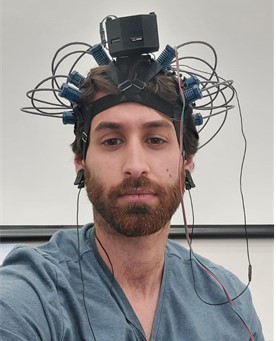
To that purpose we’ve used an EEG based BCI system which makes use of electromagnetic waves emitted by the brain to record the brain activity and later on ML algorithms,such as Genetic Algorithm, to predict the patient’s thoughts solely by using the recording.