

Chapter 1: Project Objective
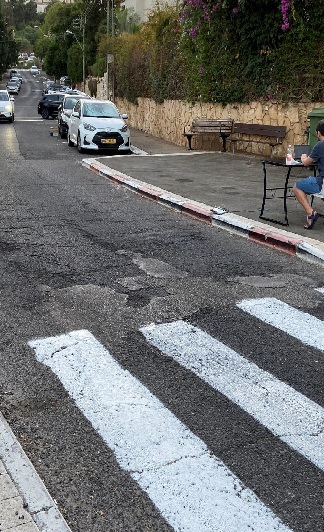
The project aims to develop a cost-effective and intelligent system based on motion sensors to aid blind and other needy individuals in safely crossing unsignalized intersections. This technology-oriented solution focuses on human safety and broad, flexible, and affordable implementation.
Chapter 2: Introduction and Background
The dynamic nature of pedestrian spaces involves numerous hazards, particularly at unsignalized crossings where both pedestrians and drivers must exercise caution. The project uses smart technology to make these crossings safer for visually impaired and other vulnerable groups, incorporating Doppler effect-based sensors to detect vehicle movements and provide alerts.
Chapter 3: Hardware Description
The system includes two Doppler motion sensors and an ultrasonic distance sensor, interfaced with a mini Arduino-based controller. A signal amplification circuit was developed to enhance the sensors’ outputs for more reliable detection.
Chapter 4: Software Description
The Arduino-based software synchronizes signals from various sensors to determine whether a road crossing is safe. It employs a flagging mechanism that updates based on sensor input, improving decision-making in real-time.
Chapter 5: Experiments and Results
Initial tests focused on each component individually to form a cohesive system. The Doppler sensor was fine-tuned to differentiate between vehicle noise and other disturbances. Various experiments showed limitations in detection range and sensitivity, leading to further hardware and software adjustments.
Chapter 6: Summary and Conclusions
The project met significant challenges in reliability and system integration, highlighting the Doppler sensors’ susceptibility to noise and their limited detection range. The system struggled with fast-moving objects like cars, indicating potential improvements for future iterations. Alternative solutions such as inductive loops or LiDAR technology could offer more reliable detection capabilities.