

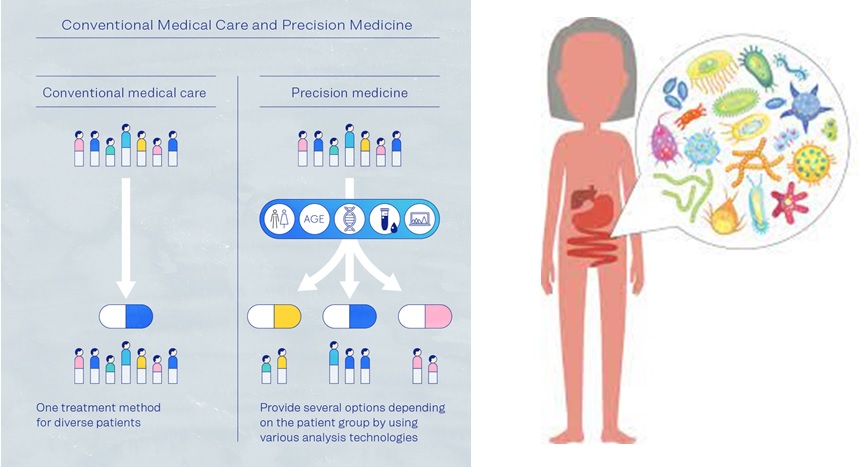
The gut microbiome refers to the microorganisms that live in the human digestive tract, including bacteria, viruses, and fungi. In medicine, the gut microbiome can be analyzed to diagnose various health conditions. by analyzing the composition of the gut microbiome, doctors can identify potential treatment options, such as probiotics, prebiotics, and fecal microbiota transplantation.
A model of the bacteria collected in the microbiome of hundreds of patients as a big correlation network is constructed. The results of the clusters within the network can give the physician invaluable insight to correctly diagnosing a patient and prescribing the correct treatment.
we created a program following very specific requirements to create networks that consist of node – bacteria, and the correlation between them – the edges, in a vast scale that is robust in its ability to accept different parameter changes.
With the model it is possible to identify contributions per patient, and per patient group, This allows to recognize if a patient has a high probability of being sick given the presents of specific bacteria and their clustering